





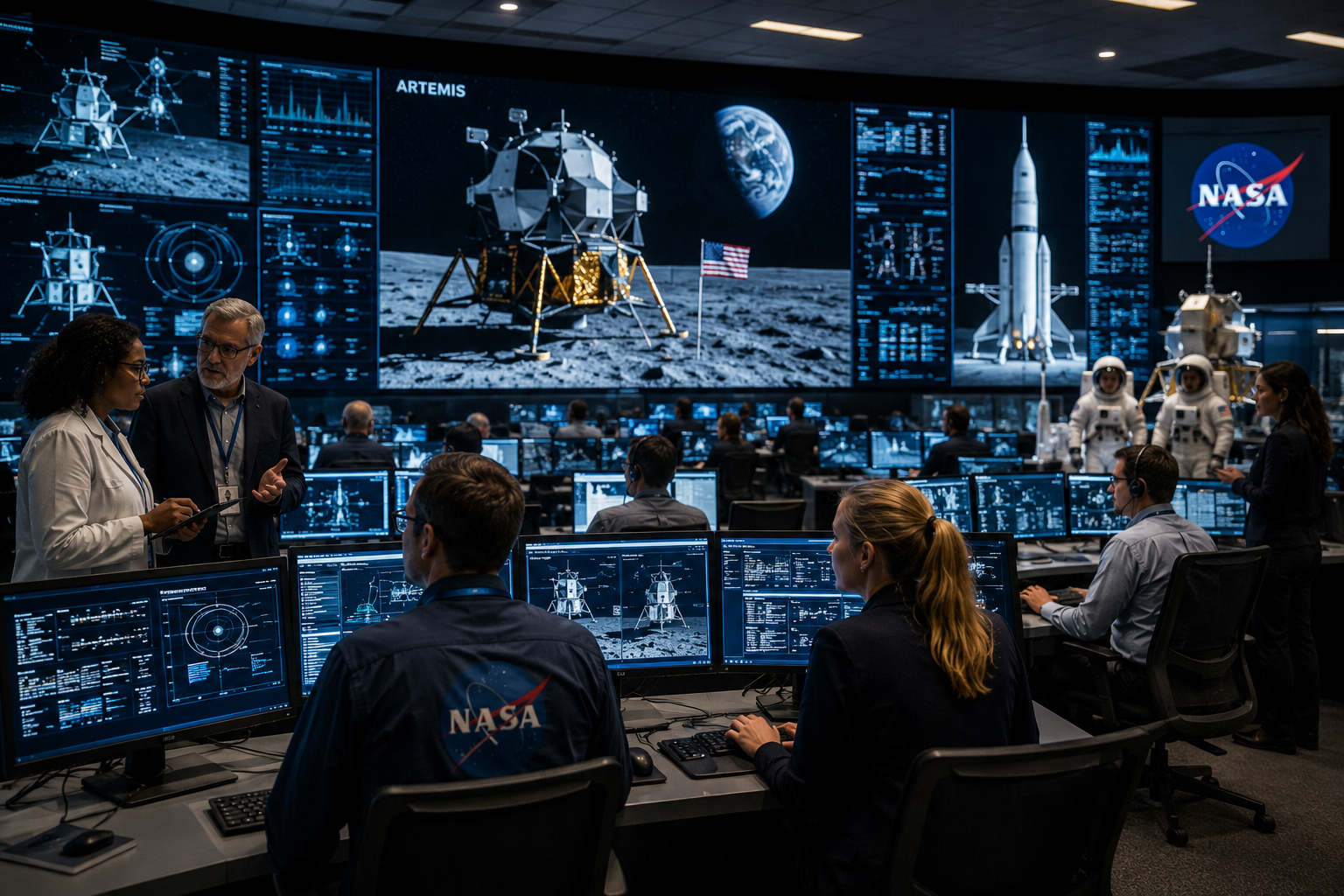
Space exploration has always depended on bold ideas, advanced technology, and strong partnerships. Today, NASA Space Partnerships are becoming even more important as the agency prepares for the next generation of missions to the Moon, Mars, and beyond.
- Why NASA Is Expanding Industry Collaboration: NASA Space Partnerships
- How NASA’s Collaboration Programs Work: NASA Space Partnerships
- Technologies That Could Shape Future Space Missions: NASA Space Partnerships
- Why Public-Private Partnerships Matter: NASA Space Partnerships
- Supporting the Artemis Generation
- Economic Benefits Beyond Space
- Challenges That Still Remain
- Why Collaboration Is the Future of Space Exploration
- What This Means for Future Generations
- Final Thoughts
Instead of working alone, NASA is increasingly collaborating with private companies, research organizations, and technology innovators to solve some of the biggest challenges in space exploration. Through its collaboration programs, the agency is encouraging industry to develop new technologies that could make future missions safer, more efficient, and more affordable.
These partnerships are not traditional government contracts. Instead, they allow NASA and participating organizations to share expertise, facilities, and technical knowledge while each side continues investing in its own innovations. This approach helps accelerate progress without placing the full financial burden on taxpayers.
As new projects move forward, NASA Space Partnerships are expected to play a major role in building the future of human space exploration.
Why NASA Is Expanding Industry Collaboration: NASA Space Partnerships
Modern space missions are far more complex than those of previous decades.
Building sustainable lunar habitats, transporting astronauts safely, producing energy on the Moon, and preparing for future Mars missions require technologies that simply do not exist yet or need significant improvement.
Rather than developing every solution internally, NASA is working alongside experienced aerospace companies and innovative startups.
This collaborative approach allows ideas to move from laboratories to real-world testing much faster.
Some key goals include:
- Supporting long-term lunar exploration.
- Improving astronaut safety.
- Developing advanced robotic systems.
- Expanding space transportation capabilities.
- Creating technologies for future Mars missions.
These priorities show why NASA Space Partnerships have become a central part of America’s long-term space strategy.
How NASA’s Collaboration Programs Work: NASA Space Partnerships
Unlike traditional procurement programs, collaborative initiatives encourage organizations to contribute their own resources while benefiting from NASA’s technical expertise.
A Shared Innovation Model
Companies continue developing their own products while working with NASA scientists and engineers.
Instead of purchasing technology outright, NASA shares:
- Technical guidance.
- Specialized facilities.
- Testing capabilities.
- Engineering knowledge.
- Mission experience.
This model helps reduce development costs while encouraging innovation across the aerospace industry.
For many organizations, access to NASA’s expertise is just as valuable as direct funding.
Technologies That Could Shape Future Space Missions: NASA Space Partnerships
Future Moon and Mars missions will require much more than powerful rockets.
Astronauts will need reliable infrastructure that can support long-term exploration far from Earth.
Several technology areas remain especially important.
Advanced Lunar Infrastructure
Future explorers will require dependable systems for living and working on the Moon.
Researchers continue developing:
- Surface power systems.
- Habitat technologies.
- Energy storage.
- Communication networks.
- Dust protection systems.
Reliable infrastructure will make longer lunar missions possible.
Smarter Robotics
Robotic systems already perform many dangerous tasks before astronauts arrive.
Future robots may:
- Build landing areas.
- Transport equipment.
- Inspect habitats.
- Conduct scientific research.
- Assist astronauts during surface operations.
Smarter robotic technology reduces mission risks while increasing productivity.
Better Space Transportation
Reliable transportation remains one of the biggest challenges in deep-space exploration.
Engineers continue exploring improvements in:
- Spacecraft design.
- Navigation systems.
- Docking technologies.
- Cargo transportation.
- In-space mobility.
Better transportation systems will support both lunar operations and future Mars expeditions.
Why Public-Private Partnerships Matter: NASA Space Partnerships
The space industry has changed dramatically during the past decade.
Private aerospace companies now develop launch vehicles, satellites, spacecraft, and advanced technologies at an unprecedented pace.
By encouraging collaboration, NASA Space Partnerships allow government researchers and private innovators to solve problems together.
This creates several advantages:
- Faster innovation.
- Lower development costs.
- Greater competition.
- Increased flexibility.
- Stronger commercial space capabilities.
Instead of duplicating efforts, organizations build upon each other’s strengths.
Supporting the Artemis Generation
NASA’s long-term exploration plans extend well beyond individual missions.
The agency aims to establish a sustainable human presence on the Moon before preparing astronauts for journeys to Mars.
Achieving these goals requires continuous technological advancement.
Industry collaboration helps develop technologies needed for:
- Long-duration missions.
- Surface operations.
- Resource utilization.
- Autonomous systems.
- Scientific exploration.
Every successful partnership moves humanity one step closer to becoming a true multi-planetary species.
Economic Benefits Beyond Space
Although these projects focus on space exploration, many resulting technologies eventually improve everyday life on Earth.
Historically, NASA research has contributed to innovations in:
- Medical equipment.
- Water purification.
- Communications.
- Advanced materials.
- Robotics.
- Artificial intelligence.
As NASA Space Partnerships continue expanding, many future technologies may find applications across healthcare, manufacturing, transportation, and environmental monitoring.
This makes investment in space exploration valuable far beyond the aerospace industry.
Challenges That Still Remain
Despite remarkable progress, significant challenges remain before humans can establish a lasting presence beyond Earth.
Some of the biggest obstacles include:
- Radiation protection.
- Reliable life-support systems.
- Energy production.
- Long-distance communication.
- Sustainable resource management.
- Equipment durability.
Addressing these challenges requires collaboration across government agencies, universities, and private companies.
No single organization can solve every problem alone.
Why Collaboration Is the Future of Space Exploration
Space exploration has entered a new era.
Instead of relying entirely on government agencies, today’s missions increasingly involve partnerships between public institutions and commercial innovators.
This collaborative model encourages faster development, broader participation, and more creative problem-solving.
As technology continues advancing, NASA Space Partnerships will likely become even more important for future scientific discoveries and deep-space exploration.
Working together allows researchers to achieve goals that would be far more difficult individually.
What This Means for Future Generations
The technologies being developed today could shape human space exploration for decades.
Future astronauts may rely on systems currently under development through collaborative programs.
Students pursuing careers in engineering, science, robotics, and computer technology may one day contribute to these ambitious missions.
Continued investment in innovation also inspires young people to pursue careers in science, technology, engineering, and mathematics.
The next generation of explorers may eventually walk on the Moon, travel to Mars, or even help establish permanent settlements beyond Earth.
Final Thoughts
NASA Space Partnerships represent an important shift in how modern space exploration is achieved. By bringing together government expertise and private-sector innovation, NASA is helping accelerate the development of technologies needed for future Moon and Mars missions.
From advanced robotics and transportation systems to lunar infrastructure and sustainable exploration technologies, these collaborations are laying the foundation for humanity’s next giant leap into space.
As more organizations contribute their knowledge and creativity, the pace of innovation will continue to grow. The future of space exploration is no longer built by one agency alone—it is being shaped through cooperation, shared expertise, and a common vision for exploring the universe.
Whether you are passionate about astronomy, engineering, or the future of human exploration, NASA Space Partnerships offer an exciting glimpse into the technologies that could define the next era of space travel.
Read Other Interesting news here: Black Hole Gravitational Waves

